
The Wonderful World of Edible Mushrooms: From Forest to Table and the Remarkable Health Benefits Worth Knowing
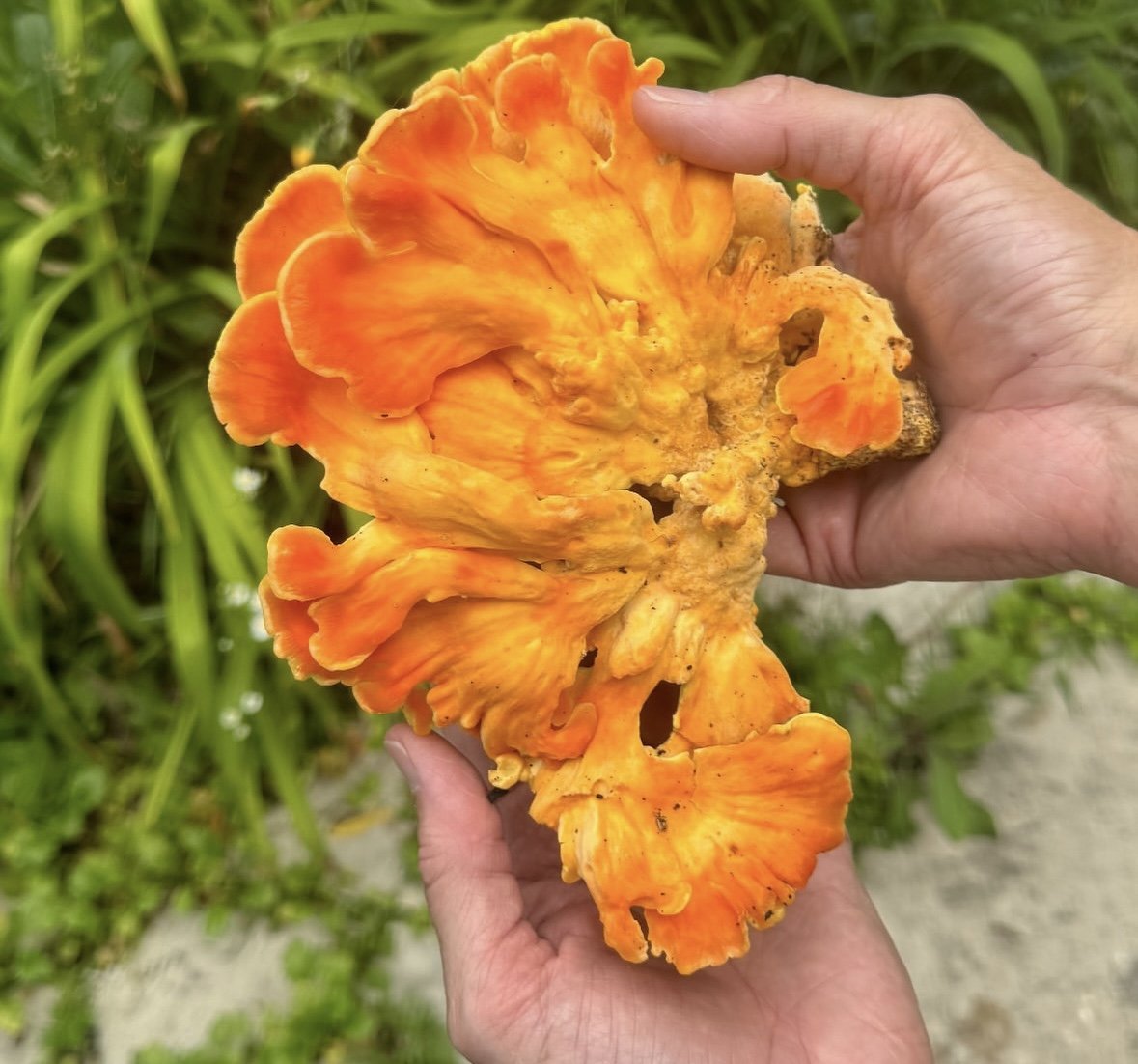
Chicken of the Woods
Ever since I first stumbled upon a blaze of orange growing out of a tree and lit up by the sun, I’ve been obsessed with mushroom foraging. I spend a lot of time in nature, practicing forest bathing, or shinrin-yoku. It’s a powerful mindfulness practice that has unexpectedly revealed a fascinating world of brightly and not-so-brightly colored fungi that have ignited my imagination. (Click here to learn more about forest bathing in my blog.) That blaze of orange and yellow mushroom near my house turned out to be chicken of the woods, one of the prized culinary treats of the forest. When properly prepared, its texture and flavor can resemble chicken. Once the forest had my attention, I began finding golden clusters of chanterelles tucked beneath leaves, morels hiding in plain sight, dense pheasant backs and toothy lion’s mane reaching out of decaying stumps, soccer-ball-sized puffballs, and oysters lined up along tree trunks. There is something almost magical about spying a wild mushroom, and the more I learn, the more intrigued I become.
Foraging has become one of my favorite mindfulness activities. Forest bathing with purpose. Over the years, I’ve learned to spot many varieties of fungi and tune into the rhythm of nature. Each variety has its own season to flush, and the timing depends heavily on the weather. This year, for example, has been very dry in my area, and wild mushrooms haven’t been as plentiful.
If you’d like to give foraging a try, I’d recommend first going with someone who is experienced or starting with the varieties that are very easy to identify. I carry a wild mushroom guide with me to be sure whatever I take checks all the boxes. I have a strict rule that if there is even the tiniest question as to whether it’s what I think it is, it stays in the woods. When in doubt, leave it out.
A word of caution: Foraging for mushrooms is risky business if you’re inexperienced or not learning alongside someone who is. Some poisonous species closely resemble desirable edible mushrooms, and certain toxins can cause severe illness or death. Never eat a wild mushroom unless it has been positively identified by someone with the appropriate expertise. Even properly identified edible mushrooms can cause digestive upset, especially if they are raw or undercooked, so cook them thoroughly.
Did you know mushrooms are more closely related to us than to plants? They occupy a fascinating place in the natural world. They’re neither plant nor animal but belong to their own biological kingdom called fungi. The fungal kingdom offers an astonishing range of flavors, textures, nutrients, and biologically active compounds. Some mushrooms are prized because they are extraordinarily difficult to find in the wild, such as morels, king boletes, and chanterelles, which command impressive prices during their short growing seasons. Others, such as shiitake, oyster, and lion's mane are cultivated on farms and widely available year-round. The brightly colored chicken of the woods and the more camouflaged hen of the woods have a devoted following among foragers and chefs. And while many people think of mushrooms simply as an ingredient for pizza, salads, pasta, or soup, these remarkable organisms have a much longer and more interesting story to tell. For thousands of years, mushrooms have been valued for their medicinal properties, and modern scientists have identified compounds in them that influence immune function, inflammation, metabolism, cellular health, and even brain function.
What keeps me interested in using mushrooms regularly as a whole food or extract isn’t just their distinctive umami flavor, but also the potent antioxidant, anti-inflammatory, and immune supporting compounds they provide. They’re one of the everyday foods I count on to help protect against a cancer recurrence and keep my immune system strong. Mushrooms are naturally low in sodium and a good source of potassium, and they contain fiber and beta-glucans, which have been linked to lower blood cholesterol, less plaque buildup in blood vessels, reduced inflammation, stronger immune function, and healthier blood pressure. Their polysaccharides and phenolic compounds have shown anti-diabetic and anti-inflammatory effects in research and may help with blood sugar control.
Mushrooms are the richest dietary source of ergothioneine, a powerful antioxidant that protects our cells and that our bodies can’t make on their own. They also contain terpenoids, compounds that have shown neuroprotective and anti-tumor activity in laboratory studies, helping fight oxidative stress and cell damage. Their non-digestible polysaccharides and fibers act as prebiotics to nourish beneficial gut bacteria, while micronutrients like selenium, B vitamins, and vitamin D (especially in UV-exposed or sunlight-treated varieties) strengthen immune defense.
According to UCLA, a review of 17 studies found that people who ate about 18 grams of mushrooms a day (roughly two medium mushrooms) had as much as a 45% lower risk of cancer. Researchers point to mushrooms’ high levels of the antioxidant ergothioneine and glutathione as the likely reason. In a Singapore study, people who ate more than two cups of mushrooms a week had a 50% lower risk of mild cognitive impairment, which is often a precursor to Alzheimer’s disease.
The good news is that you don't need to chase exotic mushroom powders or expensive supplements to enjoy their benefits. Your local grocer or farmer’s market will have a variety of fresh fungi to choose from, and properly prepared, they are a delicious addition to any balanced diet.
From the Forest to the Grocery Store
While foraging for mushrooms has the added benefit of walking mindfully through the woods, cultivated mushrooms have enormous advantages. Farmers can produce shiitake, oyster, lion's mane, maitake, button, cremini, portobello, and other species in controlled conditions. Cultivation provides a more reliable food supply, reduce pressure on some wild populations, and make many varieties of mushrooms available year-round. They’re a great option for people who don't have the opportunity or expertise to forage, which is likely most of us.
When shopping, I like to get to know local growers when I can. Farmers markets and specialty mushroom farms can introduce you to varieties you may never have tried, and growers can often explain how they were cultivated and their favorite way to prepare them. When choosing your purchase, look for mushrooms that are firm, relatively dry, and free from sliminess or obvious decay. At home, store them in the refrigerator in a breathable container, such as a paper bag, and use them while they’re fresh.
When I have too many foraged mushrooms to eat within days of picking, I’ll dehydrate them to rehydrate later or grind the dried mushrooms into a powder I can add to my smoothies or whatever I’m cooking. Adding them to a vegetable dish, grain bowl, soup, stew or pasta increases the variety of the food I eat and enhances the flavor.
The Edible Mushrooms Worth Getting to Know
Mushrooms contribute a savory quality known as umami that makes nourishing food genuinely enjoyable, without relying on lots of butter, cream, cheese, or meat. Let's start with the familiar mushrooms, because you don't have to find a rare delicacy to make mushrooms part of a disease fighting diet.
Button, Cremini and Portobello
White button, cremini, and portobello mushrooms are all forms of the same species, Agaricus bisporus, harvested at different stages of development. White buttons are mild and versatile, cremini have a deeper flavor, and portobellos develop large caps and a substantial texture that makes them especially popular as a meat alternative. They're affordable, widely available, nutrient rich, and those that are exposed to ultraviolet light also provide vitamin D.
Shiitake
Native to East Asia, shiitake mushrooms have been cultivated for centuries and are now widely available fresh or dried. We grew our own this year, and that proved to be remarkably easy. Their rich, savory flavor makes them a natural fit for soups, stir-fries, rice dishes, and sauces. They provide fiber, B vitamins, minerals, and contain lentinan, a beta-glucan that has attracted scientific interest in its effects on immune signaling.
Oyster
Oyster mushrooms have delicate, fan-shaped caps and a mild flavor that becomes wonderfully savory when sautéed or roasted. They’re an excellent choice, especially for people who want to experiment with different textures. I found my first oysters growing in a bright white line on a fallen tree a couple of years ago. While they are currently under study for their potential effects on cholesterol metabolism, they’re also interesting from a sustainability perspective because they can grow on certain byproducts that would otherwise be disposed of, such as corn cobs, pearl millet stalks, peanut shells, sawdust, and rice husks.
Lion’s Mane
Lion's mane is a striking white mushroom with cascading spines that resemble, you guessed it, a lion's mane. I was only lucky to find them once on a hike in northern Wisconsin, but I keep holding out hope. Whether foraged or cultivated, it has a texture sometimes compared to seafood and are delicious browned in a skillet or added to soups. It is popular as a culinary ingredient and an extract. Scientists are investigating their compounds called hericenones and erinacines because they may stimulate nerve growth factor. Early studies, mostly in animals and small groups of people, suggest lion’s mane may help with memory, mild cognitive decline, and symptoms of depression and anxiety, though larger human trails are still needed.
Maitake or Hen of the Woods
Maitake, also known as hen of the woods, grows in large, ruffled clusters and is prized for its rich flavor and tender feathery texture. It can be roasted, grilled, or sautéed until the edges become beautifully browned. Maitake contains beta-glucans and other polysaccharides that have been investigated for their possible effects on immune function and metabolic health.
Morels
Morels are a springtime favorite with a distinctive honeycomb-textured cap and a deep, earthy flavor. I’ll never forget the first time we found them on our farm. My youngest spotted a huge patch poking up along the tree line. It became known as Hannah’s patch, and they reliably returned each year. I sautéed that first batch with butter, thyme, and garlic. They were delicious, but we ate too many at one time. Let’s just say we learned the hard way that there’s a limit to how many you can consume to avoid digestive upset. They are difficult to cultivate, making fresh and dried morels expensive, but if you can get your hands on some, they are great in eggs, pasta, risotto, rice, ramen, pho, or udon.
Chanterelles
Chanterelles are golden to orange with a funnel-like shape, blunt, forked ridges instead of true gills, and a delicate flavor often described as fruity, peppery, and slightly nutty. After stumbling on a few while hiking with my dog, I stopped, stood still, and slowly scanned along the logs until more caps came into view, peeking up through the leaves. Suddenly, they were everywhere. Chanterelles pair beautifully with butter, shallots, garlic, eggs, potatoes, cream-based sauces, pasta, and poultry. Like other edible mushrooms, they provide fiber and micronutrients. Watch out for the jack-o”-lantern mushroom, a poisonous orange look-alike that grows in clusters on wood and has true, sharp-edged gills.
King Bolete
King boletes, commonly known as porcini, have a thick stem, a substantial brown cap, and a rich, earthy, nutty flavor. I had not heard of boletes until I found a large almost regal rust colored cap with a stocky stem standing tall in our cabin woodland. I did quite a bit of reading before deciding it was safe to eat, and it was well worth it. Fresh porcini are highly prized, while dried porcini add remarkable depth to risotto, soups, sauces, and pasta; even a small amount can add a deep savory flavor to any dish.
Chicken of the Woods
Chicken of the woods is another fascinating wild mushroom. Finding them on one of my hikes in the woods is what got me hooked on foraging in the first place. Its overlapping orange and yellow shelf-like lobes have a firm texture that can resemble chicken when properly prepared, making it a favorite of cooks who enjoy plant-forward meals. They can be sautéed, roasted, grilled, or breaded and fried. Some people experience digestive upset or allergic-type reactions after eating it, and reactions seem more likely when it grows on conifers, eucalyptus, or locust trees. Harvest only young, tender specimens, and always cook it thoroughly.
Puffballs
Some puffball species are edible when young and completely white inside, before the flesh begins to develop spores. Giant puffballs can grow to an impressive size, sometimes looking like a soccer ball sitting in a field. Their mild flavor and soft texture make them versatile in the kitchen. They can be sliced and sautéed, grilled, or breaded. But puffballs can be confused with immature poisonous mushrooms, including deadly amanitas in their early “egg” stage, so always slice each on in half from top to bottom. Identification must never rely on a photograph or one feature alone. If the inside shows gills, developing structures, discoloration, or anything other than a solid white interior, do not eat it.
What Makes Mushrooms Interesting From a Health Perspective?
Mushrooms provide a combination of nutrients and bioactive compounds that make them a useful addition to a varied diet. One group of compounds that receives considerable attention is beta-glucans. Found in the cell walls of many fungi, beta-glucans have been studied for their impact on the immune system. Different types of mushrooms contain different beta-glucans, and their biological effects depend on their structure and how they are processed. Research has not reliably shown that isolating one component and putting it in a supplement has the same impact on your health, even though the supplement industry would like to convince you otherwise. What the research does consistently show is that eating a variety of whole, fresh foods has a positive impact on your overall health.
Modern scientific study of fungi for medicine began in 1928, when Scottish bacteriologist Alexander Fleming accidentally discovered penicillin from the Penicillium mold and its ability to kill the staphylococcus bacteria. In 1958, Swiss chemist Albert Hofmann isolated psilocybin and psilocin from the Psilocybe mexicana mushroom, helping launch modern clinical research into its psychedelic and psychiatric uses. Since the 1960s, pharmacological research has expanded globally into macrofungi, investigating polysaccharides, beta-glucans, and immunomodulatory properties.
Reishi, turkey tail, and cordyceps are often discussed alongside edible culinary mushrooms, but they are more commonly sold as a tea, powder, or extract because they are too tough or bitter to enjoy like their culinary counterparts.
Reishi has a long history of traditional use in East Asian wellness practices. Researchers have studied it for immune support, heart and metabolic support, stress, sleep, and easing the side effects of cancer treatments, with promising but still limited results. Turkey tail acts as a prebiotic, has anti-inflammatory, antioxidant, and antiviral properties, and supports the immune system. In Japan, a turkey tail compound called PSK has been used for decades as a complementary cancer therapy. Cordyceps has traditionally been associated with vitality and endurance, and studies suggest it may reduce inflammation and oxidative stress and support blood sugar regulation.
The mushroom supplement industry has taken this fascinating research and, in some cases, turned it into some pretty extraordinary claims. There is a lot to be excited about when it comes to mushrooms, but there is also a lot of marketing masquerading as science. Don’t believe every claim you see on social media even those pushed by medical doctors. There’s a whole industry out there that’s gotten very good at taking your money and giving very little in return. There are protocols, programs, powders, pills, supplements, subscriptions and an endless stream of people telling you that if you just buy the product they’re promoting, you’ll have the same health benefits they claim to have had. Overall the message is, buy the product and you’ll feel better, live longer and dodge the disease bullet. How many have you tried a product you saw on social media? Did you get the results as advertised? Did they last?
The world of mushrooms is vast, ancient, and still only partly understood. We can appreciate their remarkable biology while keeping our feet firmly on the ground about what the evidence tells us. Their nutritional value is clear, but we don’t need to turn mushroom compounds into some sort of miracle supplement to recognize what they offer. No single ingredient does the trick, and no mushroom should be expected to prevent or cure disease on its own. Fungi like fruits, vegetables, grains and other whole foods benefit us because of the combination of nutrients they provide and the way they interact with each other in your body. Eating whole fresh foods will do more for your body than any processed product aggressively marketed today. I can assure you from first-hand experience, protecting your health just isn’t that complicated. First start by adding fresh whole mushrooms to your grocery list along with other whole foods and you’ll be on your way in no time.
If you’re considering concentrated mushroom supplements, particularly if you take prescription medication or are receiving treatment for a medical condition, discuss them with a qualified healthcare provider. They can cause side effects and drug interactions and should never replace prescribed treatment. with your medication. I would also recommend you do your own research on promised benefits. I’ve had clients not in treatment use mushroom supplements and experience serious side effects, and others who didn’t. Your body is unique, so what works for one person may not work for you.
Three Simple Ways to Bring Mushrooms to Your Table
You don't need elaborate techniques or expensive ingredients to enjoy mushrooms. Their natural savory flavor does much of the work for you. The three recipes at the end of the article use accessible varieties and familiar ingredients, making it easy for you to try different textures and flavors while keeping the focus on nourishing, satisfying meals. Give them a try!
The small decisions you make just for today aren’t about flipping your world upside down. They’re about building a practice that will sustain your health over a lifetime. Because healing doesn’t happen with one big dramatic event or change. It's the small things we do consistently that matter the most.