
Reiki: The Toe Injury That Started a Global Healing Movement
The Toe Injury That Started a Global Healing Movement
Have you ever noticed that your body sometimes knows what it needs before your mind does?
Racing thoughts. Tight shoulders. Knots in your stomach. Exhaustion you can’t explain. We’re all pretty good at pushing through these signals instead of listening to them. That’s one of the reasons I continue to come back to Reiki. When we’re healing, we’re calming the nervous system, reconnecting with ourselves, and creating the internal conditions that allow the body to do what it was designed to do. Reiki expedites the process.
Picture this: A Japanese spiritual seeker named Mikao Usui, fasting alone on a sacred mountain in 1922, is suddenly struck by what he describes as a bolt of energy through the crown of his head. He stumbles down the mountain, tearing off a toenail on the way, and instinctively grabs his foot and with his hands over the toe blows on it. The bleeding stops almost instantly. It was Usui’s painful toe injury that led to our current understanding of Reiki and its use in homes, clinics and hospitals across the globe.
Twenty-five years ago, if someone had told me I'd someday be a Reiki practitioner, I probably would have laughed and rolled my eyes. Then, cancer entered my life. Gratefully, modern medicine blunted cancer growth, slowing everything down until I had a chance to sort myself out with the help of meditation and Reiki through which I discovered that healing happens in the body, certainly, but it also happens in the nervous system, the heart, the mind, and perhaps even the soul.
Why Reiki?
The word Reiki means universal energy and was first written more than 5000 years ago. In Chinese traditions it’s known as Qi (vital energy). In ancient Indian traditions it’s known as prana (life force). The Bible has many references to the “laying on of hands.” For example, in Mark 16:17-18 when Jesus tells his followers they will “lay hands on the sick, and they will recover.”
After my cancer diagnosis, I began meditating simply because I needed something to do with all my time between doctor’s appointments. Long before I ever formally received Reiki, I noticed something changing. My mind became quieter, my breathing slowed, and I felt more connected to God or Consciousness than I ever had before. When I eventually had my first Reiki session, I recognized the same profound stillness. Meditation and Reiki changed not only how I viewed healing but more importantly how to fully live in a healed state.
From there, I studied Reiki to become a practitioner. It wasn’t long before I developed a keen interest in its history and discovered that much of what I had learned in Western Reiki wasn’t reflective of Usui’s teachings. The original Reiki had no elaborate rituals, complicated belief systems, or special tools necessary to initiate healing. All it required was a quiet presence, gratitude, intuition and being open to the body's own wisdom to guide the session.
Before his death, Usui trained 16 high-ranking community members in Kyoto who committed to go out into the countryside and ensure at least one person in every village knew how to access Reiki and would share it willingly. After his mountaintop experience, he built a simple, hands-on practice that could be taught to anyone who chose to learn. He wasn’t selling mysticism. There was no secret hierarchy and no fees for "symbols" said to be “given” to one individual.
How it changed crossing the Pacific
Usui's student Chūjirō Hayashi, a naval physician, brought clinical rigor to the treatment, tracking outcomes and reading the body’s energy to know where to focus. He called it byosen, an intuitive awareness of energetic imbalances. In 1937, Hayashi traveled to Hawaii and trained 350 students, including Hawayo Takata who embarked on spreading Reiki throughout the West.
Unfortunately, to win over skeptical Western audiences, Takata reinvented the origin story, claiming (falsely) that Usui was a Christian monk trained in Chicago. She added "secret" symbols, created the Level I/II/Master system most people associate with Reiki today, charged steep fees, and shortened sessions to fixed 3–5-minute hand positions.
Meanwhile, in Japan, Hayashi's student Chiyoko Yamaguchi continued to quietly practice the original method within her community.
Her son Tadao Yamaguchi later said: "I saw my mother use Reiki every day. It was just part of our life — natural, practical, and sacred."
Setting the record straight
Historian and Reiki practitioner Frank Arjava Petter spent years in Japan separating fact from folklore and restoring Usui’s original framework. His research can be found in his books Reiki Fire, Reiki: The Legacy of Dr. Usui, This Is Reiki. By 1999, Petter had gained the trust of the Yamaguchis and together they founded the Jikiden Reiki Institute in Kyoto, Japan. Today, Jikiden Reiki is taught in more than 40 countries.
What Actually Happens During a Reiki Session?
If you’re thinking you’d like to try Reiki, you might have all kinds of wild ideas about the mysterious things that could happen while you’re on the table, but the reality is beautifully ordinary. The deepest healing doesn't require doing more. It requires softening, becoming still and being open to receive.
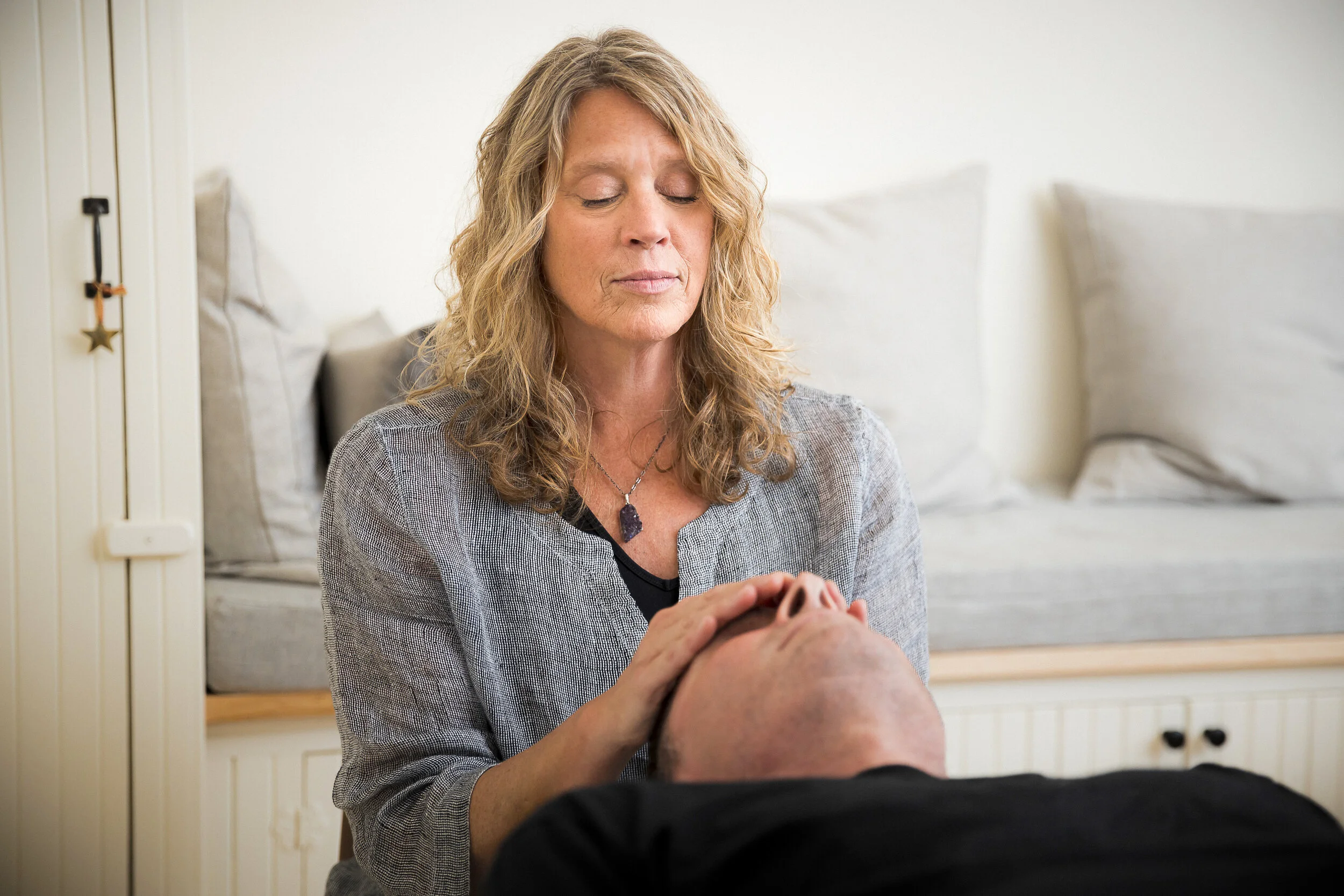
While you can tap Reiki on your own, most will seek out a practitioner to get started. Fully clothed, you’ll be asked to rest comfortably on a treatment table while soft music plays in the background. All you have to do is bring awareness to your breath and let go.
When I provide Reiki, I act as a conduit between Reiki and the person on my table. Guided by byosen, I gently place my hands on or just above different areas of the body, allowing Reiki to flow wherever it’s needed most. There is no manipulation. No massage. No pressure. And no attempt to "fix" you. In fact, I will never call myself a healer. To do so implies you can’t heal yourself. I am simply a conduit, reconnecting you to your innate healing abilities.
During a session, many notice increased warmth, a tingling sensation, heaviness, gentle pulsing, vivid colors behind closed eyes, or a sensation of floating. Some drift into a deep sleep. Others become emotional, releasing the stress held in their body. Many often feel the practitioner’s hands where they are not. While every session is unique, the one thing that is remarkably consistent when a person leaves the table is the feeling of calm.
The Neuroscience of Relaxation
One reason Reiki continues to intrigue researchers is that it consistently appears to help people relax deeply. Our bodies are designed with two primary operating systems. One is the sympathetic nervous system—our fight, flight, or freeze response characterized by high stress. The other is the parasympathetic nervous system, often called the "rest and repair" system.
When we're living under chronic stress, our heart rate increases, blood pressure rises, and stress hormones like cortisol remain elevated. Our digestion slows, inflammation increases, sleep suffers and healing becomes more difficult.
During relaxation, the parasympathetic nervous system takes over and the opposite happens. Breathing slows. Muscles relax. Heart rate decreases. Digestion improves. And the body shifts from surviving to thriving.
Researchers don't fully understand the mechanism behind Reiki, but evidence shows it helps activate the relaxation response, reduces physiological stress and improves overall well-being. That’s something worth paying attention to.
Reiki in Medical Centers
As a cancer survivor, I want to be absolutely clear. Reiki does not replace medical treatment. There are remarkable stories of healing without conventional medicine, but generally success is found through an integrative approach, using both conventional and unconventional modalities.
Today, Reiki is offered in hospitals across the globe and through integrative medicine programs at institutions including Johns Hopkins, Mayo Clinic, Memorial Sloan Kettering, Cleveland Clinic, MD Anderson Cancer Center, Brigham and Women's Hospital, and many others as complementary care to manage stress, anxiety, pain, nausea, and fatigue.
A growing body of research shows that Reiki improves overall quality of life, particularly by reducing anxiety, stress, and pain. A study published in the Journal of Pain and Symptom Management evaluated nearly 400 Reiki sessions provided to people receiving cancer infusions. Patients reported immediate improvement in pain, anxiety, fatigue, nausea, and overall well-being.
The most exciting study to date is a four-year MD Anderson Cancer Center study, led by Dr. Lorenzo Cohen, into biofield therapy, the broader category Reiki belongs to. Working with pancreatic cancer cells in a petri dish and animal models (to rule out placebo effects), researchers found biofield therapies reduced metastasis by more than 50%, which is comparable to chemotherapy but without the toxicity.
While my experience with Reiki over the past two decades is considered anecdotal, the benefits are undeniable.
Healing Begins Within
One of my favorite things about Jikiden Reiki is that it reminds us we are not broken. Our bodies already know how to heal. Think of a cut. You don't consciously direct the healing, yet your body heals.
Perhaps the greatest lesson Reiki offers is that healing doesn't arrive through dramatic moments. It begins with one quiet breath. One grateful heart. One moment at a time. Treat yourself with the same kindness you so freely offer others because healing often isn’t about fixing what’s broken, it’s about remembering what has always been whole.
Usui taught five simple principles called the Gokai that remain just as relevant today:
Just for today…
Do not be angry.
Do not worry.
Be grateful.
Do your work honestly.
Be kind to others.